We use cookies to make your experience better.
To comply with the new e-Privacy directive, you agree to the privacy policy and our use of cookies.

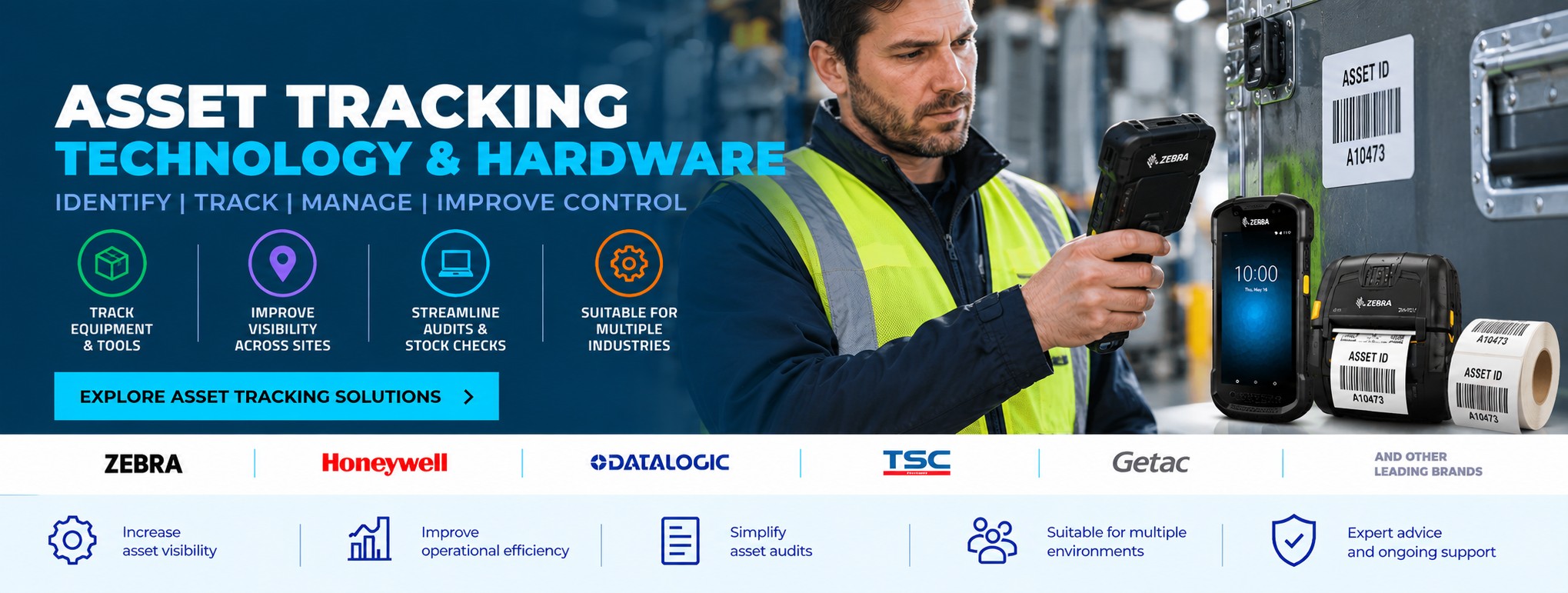
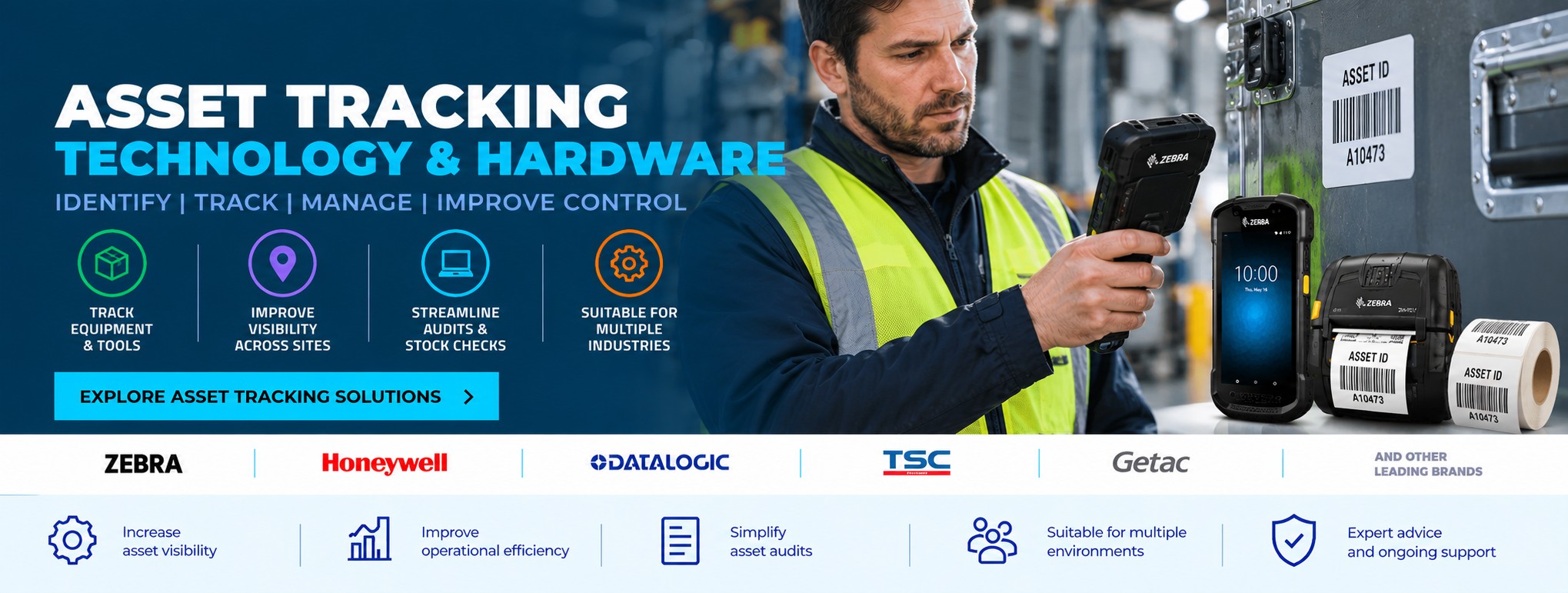
Asset Tracking Technology & Hardware
Businesses need to know what equipment they own, where it is located and who is using it. The right asset tracking technology can make it easier to identify, record and manage valuable equipment across offices, warehouses, factories, field operations and multiple business locations.
Tek Direkt supplies asset tracking hardware for UK businesses, including barcode scanners, rugged mobile computers, RFID readers, label printers and related Auto-ID technology from leading manufacturers such as Zebra, Honeywell and Datalogic.
Whether you're introducing asset identification for the first time or replacing hardware within an existing system, the right equipment depends on how your assets are identified, where they are located and how employees need to interact with them.
What Is Asset Tracking Technology?
Asset tracking technology provides a way of identifying physical equipment and connecting it with a digital record.
An asset might be identified using a:
-
Barcode
-
QR code
-
RFID tag
-
Serial number
-
Other machine-readable identifier
Employees can then capture that identifier using suitable hardware and use compatible software to view or update the associated asset record.
Potentially tracked assets include:
-
IT equipment
-
Tools
-
Machinery
-
Test equipment
-
Vehicles
-
Medical equipment
-
Office equipment
-
Production equipment
-
Containers
-
Returnable assets
The identification technology, hardware and software all need to work together.
Barcode Asset Tracking
Barcode tracking is one of the most straightforward ways to identify business assets.
Each asset is assigned a unique barcode or QR code. Employees scan the code using a compatible barcode scanner or mobile computer to access or update its record.
Barcode asset tracking can be suitable for:
-
Equipment registers
-
Tool tracking
-
IT asset management
-
Maintenance
-
Inspections
-
Equipment issue and return
-
Stockrooms
-
Multi-site operations
Because the user deliberately scans an individual identifier, barcode systems can provide a simple and controlled asset-identification process.
RFID Asset Tracking
RFID provides another approach to identifying and tracking physical assets.
Instead of requiring a barcode to be individually aligned with a scanner, compatible RFID readers communicate with RFID tags using radio frequency technology.
This can be useful where businesses need to identify multiple tagged items or improve visibility of assets moving through particular processes or locations.
For a detailed look at handheld and fixed RFID equipment, see our RFID Readers & Scanners for Business page.
Barcode or RFID for Asset Tracking?
Neither technology is automatically the right choice for every application.
Barcode asset tracking may be appropriate where employees can easily access each asset and deliberately scan its identifier.
RFID asset tracking can be useful where line-of-sight scanning is inconvenient or where businesses want to identify tagged assets differently from a conventional barcode workflow.
Some organisations may use both technologies.
The decision maker should consider:
-
Number of assets
-
Asset value
-
Working environment
-
Required identification speed
-
Asset location
-
Existing systems
-
Tag or label requirements
-
Available budget
-
Required workflow
Barcode Scanners for Asset Tracking
A barcode scanner can provide a simple way to capture asset identifiers.
Depending on the application, businesses may use:
-
Corded barcode scanners
-
Cordless barcode scanners
-
Rugged barcode scanners
-
2D barcode scanners
-
Industrial scanners
A 2D-capable device may be required where assets are identified using QR codes or Data Matrix codes as well as conventional linear barcodes.
The scanner must also be compatible with the system or computer receiving the captured data.
Mobile Computers for Asset Management
A mobile computer combines barcode data capture with a portable computing platform.
This allows an employee to scan an asset and interact with the associated application using the same device.
Potential workflows include:
Scan asset → Open record → Check details → Update information → Save
This can be particularly useful for:
-
Asset audits
-
Stocktaking
-
Equipment inspections
-
Maintenance
-
Equipment issue and return
-
Multi-site asset management
-
Field service
Where employees need to work away from a desk, a mobile computer can provide considerably more functionality than a standalone scanner.
Handheld RFID Readers
Handheld RFID readers allow employees to take RFID data capture to the assets rather than requiring assets to pass a fixed reading point.
They can potentially support:
-
Asset searches
-
Inventory checks
-
Equipment audits
-
Tool management
-
Stock counts
-
Mobile RFID workflows
Some solutions combine RFID reading, barcode scanning and mobile computing within the same handheld platform.
Always check the exact device configuration and supported technologies before ordering.
Fixed RFID Readers
Fixed RFID infrastructure can be used where businesses want RFID reading to occur at a defined location.
Depending on the wider system design, readers and antennas may be installed around areas such as:
-
Entrances
-
Exits
-
Doorways
-
Goods-in areas
-
Dispatch points
-
Storage areas
-
Production processes
Fixed RFID deployments require more planning than simply purchasing a handheld reader. Reader placement, antennas, tags, the physical environment and software integration all need to be considered.
Asset Labels & Identification
Asset tracking starts with a reliable identifier.
Barcode labels can be produced for equipment using a suitable label printer and label material.
The correct media depends on the asset and environment.
Consider factors including:
-
Surface material
-
Expected label life
-
Indoor or outdoor use
-
Abrasion
-
Moisture
-
Chemicals
-
Temperature
-
Required barcode size
-
Available label area
A label used on an office monitor may have very different requirements from one attached to industrial equipment.
Label Printers for Asset Tracking
Businesses creating their own barcode asset labels need a suitable label printer.
Depending on volume and working environment, this could include:
-
Desktop label printers
-
Industrial label printers
-
Mobile label printers
Desktop printers can be appropriate for lower-volume centralised printing, while industrial printers are designed for more demanding printing environments.
Mobile printers can be useful where labels need to be produced at the asset's location rather than at a fixed workstation.
Asset Tracking in Warehouses
Warehouses contain more than saleable inventory.
Businesses may also need to manage:
-
Forklift equipment
-
Scanners
-
Mobile computers
-
Printers
-
Tools
-
Cages
-
Containers
-
Handling equipment
-
IT hardware
Barcode or RFID identification can form part of a wider process for recording where these assets are located and how they are being used.
For warehouse data capture, see our Warehouse Barcode Scanners and Mobile Computers for Warehousing & Logistics pages.
Asset Tracking in Manufacturing
Manufacturers may need to identify equipment, tools, components, containers and other physical assets throughout production facilities.
Potential applications include:
-
Tool identification
-
Equipment maintenance
-
Inspection
-
Calibration records
-
Production equipment
-
Returnable containers
-
Work-in-progress identification
-
IT and operational hardware
Where permanent marks are applied directly to components rather than labels, specialist DPM data capture may also be required.
See our Barcode Scanners for Manufacturing and DPM Barcode Scanners pages.
Tracking Tools & Equipment
Tools can be difficult to manage when they move between employees, vehicles, workshops and customer sites.
A suitable asset-management process can allow organisations to record activities such as:
-
Tool issued
-
Tool returned
-
Current location
-
Assigned employee
-
Inspection completed
-
Maintenance required
The exact workflow is controlled by the asset-management software, while barcode or RFID hardware provides the physical identification and data-capture layer.
IT Asset Tracking
Computers, monitors, tablets, networking equipment and other IT hardware can represent a significant business investment.
Unique asset labels can help organisations associate physical devices with records containing information such as:
-
Asset number
-
Serial number
-
Location
-
Assigned user
-
Purchase information
-
Service history
-
Replacement status
Barcode scanners or mobile computers can then make physical asset audits quicker than manually entering individual identifiers.
Asset Tracking for Field Service
Assets do not always remain inside a warehouse or business premises.
Field-service teams may need to identify customer equipment, tools or company-owned assets while working remotely.
Rugged mobile computers can provide access to compatible asset or maintenance applications while also capturing barcode identifiers.
For mobile engineers and field teams, see our Mobile Technology for Field Service page.
Asset Audits & Stock Checks
Periodic asset audits help businesses compare physical equipment with the records held in their systems.
Instead of manually typing asset numbers, employees can use barcode or RFID technology to capture identifiers electronically.
The appropriate approach depends on the volume of assets, physical environment and tracking system being used.
For larger deployments, businesses should test the proposed workflow before rolling it out across every location.
Multi-Site Asset Tracking
Businesses operating multiple locations may need to understand not only which assets they own but where those assets are currently assigned.
A suitable system may allow equipment to be associated with:
-
Sites
-
Departments
-
Employees
-
Vehicles
-
Storage locations
-
Customers
-
Projects
Portable data-capture hardware can make it easier to carry out audits and record asset movements across different locations.
Rugged Hardware for Asset Tracking
Asset tracking frequently takes place in operational environments rather than offices.
Warehouses, factories, workshops, outdoor locations and field-service operations can expose devices to greater levels of handling and environmental stress.
Where appropriate, consider rugged hardware designed for professional use.
The required level of protection should be matched to the real environment rather than simply selecting the most rugged device available.
Zebra Asset Tracking Hardware
Zebra Technologies produces barcode scanners, enterprise mobile computers, RFID technology and label printers that can form part of asset-tracking deployments.
Because product families can contain multiple configurations, check the full manufacturer part number when comparing Zebra hardware.
Honeywell Data Capture
Honeywell supplies enterprise barcode scanning and mobile-computing technology suitable for a range of asset-identification and operational workflows.
The appropriate device depends on scanning requirements, connectivity, environment and the software being used.
Datalogic Data Capture
Datalogic provides barcode scanning and mobile data-capture technology for industrial, retail and enterprise applications.
When choosing hardware for asset tracking, confirm compatibility with the identifiers and application used within your organisation.
Asset Tracking Hardware & Software
Hardware is only one part of an asset-tracking system.
A complete environment may combine:
Asset label or RFID tag + data-capture hardware + network connectivity + asset-management software
Tek Direkt supplies the hardware and Auto-ID technology used to identify and capture information about physical assets.
The asset-management software determines how that information is stored, managed and reported.
How to Choose Asset Tracking Hardware
Before selecting equipment, establish:
-
What assets need tracking?
-
How many assets are involved?
-
Where are they located?
-
Will you use barcodes, RFID or both?
-
Are existing assets already labelled?
-
Do employees need a scanner or full mobile computer?
-
Will equipment be used outdoors?
-
Is rugged hardware required?
-
Are assets spread across multiple sites?
-
Do labels need to be printed?
-
What label durability is required?
-
Is cellular connectivity needed?
-
Which software will manage the asset records?
-
Does existing hardware need to remain compatible?
Answering these questions first makes it much easier to identify the appropriate equipment.
Build a Complete Asset Tracking Hardware Solution
Depending on the application, an asset-tracking environment might combine:
Asset labels + label printer + barcode scanners + mobile computers + RFID readers + asset-management software
Not every organisation needs every component.
The right approach depends on the assets, workflow and technology already in use.
Buy Asset Tracking Hardware
Tek Direkt supplies asset tracking hardware for businesses across the UK, including barcode scanners, mobile computers, RFID readers and label printers from leading manufacturers.
If you already know which hardware you need, send us the manufacturer part number (MPN) and quantity for a competitive business quotation.
Already have another supplier's price?
Use Beat My Quote and send us the MPN, quantity or existing quotation for another price to compare.

