We use cookies to make your experience better.
To comply with the new e-Privacy directive, you agree to the privacy policy and our use of cookies.

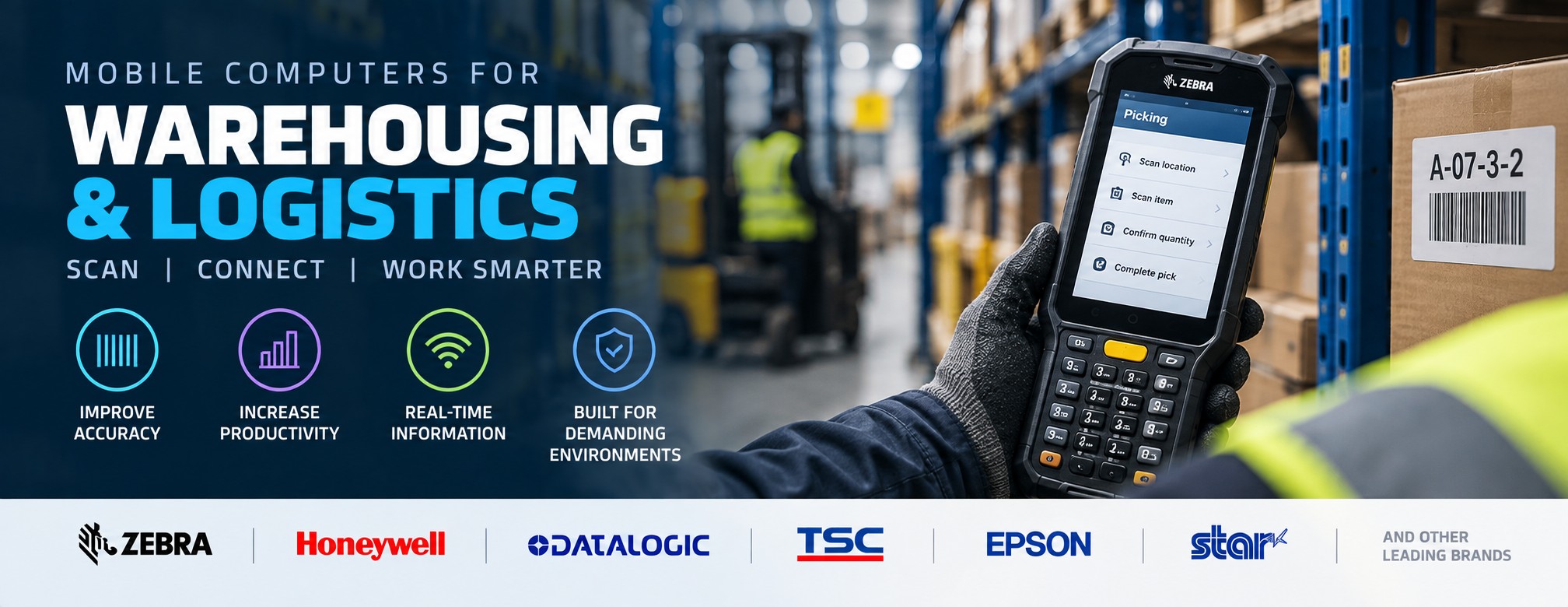
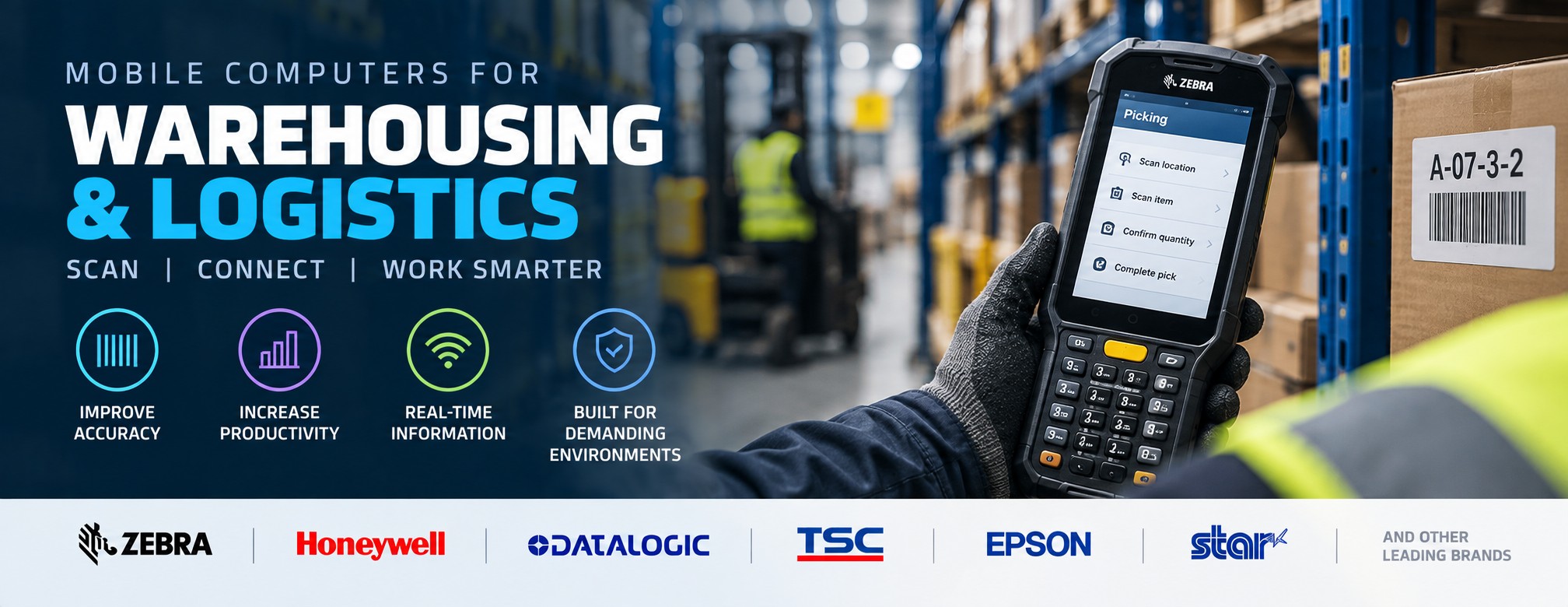
Mobile Computers for Warehousing & Logistics
Tek Direkt supplies mobile computers for warehousing and logistics, giving warehouse teams access to barcode scanning, inventory information and business applications while they move throughout an operation.
Unlike a conventional barcode scanner, a mobile computer combines professional barcode data capture, a display, operating system and wireless connectivity in a single handheld device.
Warehouse mobile computers can support goods-in, put-away, picking, replenishment, stock control, packing, dispatch and other workflows where employees need to scan barcodes and interact with a warehouse management system (WMS), inventory platform or other business application at the point of activity.
Choose mobile computers from leading manufacturers including Zebra Technologies, Honeywell and Datalogic.
If you already know the device or configuration you require, send Tek Direkt the manufacturer part number (MPN) and quantity for a business quote.
What Is a Warehouse Mobile Computer?
A warehouse mobile computer is a professional handheld device designed to allow workers to capture barcode data and access business applications while moving around a warehouse, distribution centre or logistics operation.
Most modern devices combine:
- Integrated 1D and 2D barcode scanning
- Touchscreen or keypad operation
- Wi-Fi connectivity
- Mobile operating system
- Rechargeable battery
- Rugged construction options
- Enterprise device-management capabilities
- Accessories such as charging cradles, batteries and hand straps
This makes a mobile computer different from a conventional barcode scanner, which normally sends captured barcode data to a separate computer, terminal or other host device.
Mobile Computers for Warehouse Picking
Order picking is one of the most common applications for warehouse mobile computers.
Workers can carry a device as they move between stock locations, allowing them to access picking information and scan products or locations without returning to a fixed workstation.
Depending on the warehouse software being used, a mobile computer can support workflows such as:
- Displaying picking instructions
- Scanning storage locations
- Confirming products
- Capturing quantities
- Recording completed picks
- Identifying picking errors
- Updating inventory information
The appropriate device depends on factors including warehouse size, scan distance, application requirements and the physical working environment.
Goods-In & Receiving
Mobile computers can be used as goods arrive at a warehouse or distribution centre.
Workers can scan incoming products, cartons, pallets and location barcodes while processing stock at the point of receipt.
Typical receiving workflows can include:
- Goods receipt
- Product identification
- Purchase-order verification
- Pallet identification
- Stock-location assignment
- Inventory updates
- Exception handling
Using mobile devices allows data to be captured where the goods are physically being handled rather than relying solely on a fixed workstation.
Put-Away & Replenishment
Once goods have been received, mobile computers can support put-away by allowing workers to scan both the stock and its assigned storage location.
The same technology can be used for replenishment workflows as inventory moves from bulk storage into picking locations.
Scanning products and locations can help organisations maintain more accurate inventory records and reduce errors caused by manual data entry.
Inventory & Stock Control
Warehouse mobile computers can make physical inventory and cycle-counting processes considerably more mobile.
Instead of recording stock manually and entering information later, operators can scan items and locations while moving around the facility.
Applications can include:
- Cycle counting
- Stock checks
- Location verification
- Inventory adjustments
- Replenishment
- Asset identification
- Stock transfers
The functionality available ultimately depends on the inventory or warehouse-management software running on the device.
Packing & Dispatch
Mobile computers can also support the later stages of warehouse fulfilment.
At packing and dispatch, devices can be used to capture product, carton, order, pallet and shipment barcodes.
This can help businesses create a connected workflow from:
Goods-In → Put-Away → Inventory → Picking → Packing → Dispatch
The same mobile computing platform can therefore be deployed across several warehouse processes rather than being limited to one task.
Mobile Computers vs Barcode Scanners
A dedicated barcode scanner and a mobile computer can both capture barcodes, but they solve different operational problems.
A barcode scanner is usually the better option where the operator primarily needs to scan a barcode and send that information to a nearby workstation or computer.
A mobile computer is more appropriate where the operator needs to scan barcodes and access information or applications while moving around the warehouse.
For example:
Packing bench: A corded or cordless barcode scanner may be sufficient.
Warehouse picking: A mobile computer may be more appropriate because the worker can view picking instructions and scan stock while moving between locations.
Inventory counting: A mobile computer allows the operator to capture data while moving throughout the facility.
Goods-in desk: Either solution may work depending on whether the employee needs access to mobile applications.
For more information about dedicated scanning hardware, see our Warehouse Barcode Scanners page.
You can also read our warehouse barcode scanner buying guide for more information about choosing corded, cordless, rugged and long-range scanning hardware.
Choosing a Mobile Computer for a Warehouse
Not every warehouse requires the same type of mobile computer.
Before choosing a device, consider:
- Scanning distance – close-range product labels or longer-range rack and pallet labels
- Barcode type – 1D, 2D or both
- Device format – touchscreen, keypad or specialist warehouse form factor
- Ruggedness – particularly for demanding warehouse and industrial environments
- Wireless connectivity
- Battery runtime
- Screen size
- Operating system
- Warehouse software compatibility
- Accessories and charging
- Device-management requirements
The exact manufacturer part number is important because devices within the same product family can have different scan engines, memory, connectivity and other factory configurations.
Standard-Range vs Extended-Range Scanning
Scan distance can be particularly important in warehouse environments.
A standard-range scan engine may be ideal for products, totes and labels that are within easy reach.
Large warehouses may also require workers to capture barcodes from:
- High warehouse racking
- Pallets
- Large cartons
- Storage locations
- Items several metres away
In these environments, a mobile computer equipped with an appropriate extended-range scan engine can reduce the need for operators to physically approach every barcode.
Don't assume every configuration within the same mobile-computer family provides the same scan range. Check the complete MPN and scan-engine specification before ordering.
Rugged Mobile Computers for Warehouses
Warehouses can be demanding environments for mobile technology.
Devices may be exposed to drops, repeated handling, dust, changing temperatures and intensive daily use.
Rugged mobile computers are designed specifically for professional operational environments and can offer greater protection than consumer smartphones.
When comparing devices, consider:
- Drop specifications
- IP rating
- Operating temperature
- Screen durability
- Battery design
- Replaceable battery options
- Charging infrastructure
- Availability of protective accessories
The most rugged device isn't automatically the right choice for every operation. A lighter device may be preferable in less demanding environments where workers carry the hardware throughout an entire shift.
Touchscreen or Keypad Mobile Computer?
Modern warehouse mobile computers are available in several form factors.
Touchscreen Mobile Computers
Touchscreen devices provide a familiar smartphone-style interface and can be particularly suitable for modern graphical warehouse applications.
They can work well for:
- Inventory management
- Receiving
- Stock checking
- General warehouse applications
- Logistics workflows
Keypad Mobile Computers
Physical keypads remain useful in some warehouse and industrial applications where workers regularly enter quantities, codes or other information.
They can also suit organisations replacing older warehouse terminals where existing workflows have been designed around physical keys.
The best choice depends on the software, workflow and operator requirements rather than one format universally being better than the other.
Zebra Mobile Computers for Warehousing
Zebra Technologies offers one of the broadest ranges of professional mobile computers for warehouse and logistics applications.
The portfolio includes compact touchscreen devices alongside rugged warehouse-oriented mobile computers.
Examples include the Zebra TC22, TC27, TC53, TC58 and MC3400, covering applications ranging from general enterprise mobility to more demanding warehouse workflows.
The Zebra MC3400, for example, is positioned specifically around warehouse and manufacturing applications such as picking, put-away and inventory management.
When buying Zebra mobile computers, check the complete MPN carefully because configurations can differ in areas such as scanning capability, connectivity and memory.
Honeywell Mobile Computers for Warehousing
Honeywell supplies enterprise mobile computers for warehouse, logistics, retail and field applications.
Honeywell devices available across its mobile-computing portfolio include the CT30 XP, CT32, CT45, CT45 XP and CT47.
For more demanding logistics and warehouse applications, rugged models such as the Honeywell CT47 provide an option for businesses requiring professional mobile data capture in operational environments.
As with Zebra, check the exact Honeywell configuration rather than comparing products solely by family name.
Datalogic Mobile Computers for Warehousing
Datalogic provides mobile computers for inventory management, stock checking, picking, receiving and other mobile workflows.
Its range includes compact handheld devices and rugged touchscreen or keyboard-based mobile computers with integrated barcode scanning.
Datalogic's mobile computing portfolio is particularly relevant to warehouse, retail, manufacturing and logistics applications.
Mobile Computers & Warehouse Management Systems
A mobile computer provides the hardware platform, but the actual warehouse workflow is determined by the software being used.
Businesses may use mobile computers with:
- Warehouse Management Systems (WMS)
- Inventory-management platforms
- ERP systems
- Stock-control applications
- Delivery and logistics applications
- Custom business software
Before purchasing a larger deployment, check that the intended device, operating system, scanner and connectivity are compatible with the software environment.
For significant deployments, testing the intended hardware with the actual application before wider rollout can help avoid compatibility issues.
Charging, Batteries & Accessories
The mobile computer itself is only one part of a warehouse deployment.
Consider how devices will be charged, stored and carried throughout the working day.
Depending on the manufacturer and device family, accessories can include:
- Single-device charging cradles
- Multi-device charging cradles
- Spare batteries
- Battery chargers
- Hand straps
- Holsters
- Protective cases
- Vehicle mounts
- Pistol-grip or trigger accessories
For larger deployments, charging infrastructure should be considered at the same time as the mobile computers rather than after the devices have been purchased.
Mobile Computers for Logistics
Mobile computers aren't restricted to activity inside a warehouse.
Logistics operations can also use mobile devices for workflows involving:
- Loading
- Distribution
- Delivery
- Collection
- Proof of activity
- Inventory movement
- Vehicle operations
- Field-based barcode capture
Where workers operate away from warehouse Wi-Fi, cellular connectivity may also become an important consideration.
This is one reason the exact device configuration matters: two mobile computers from the same family may be intended for different connectivity requirements.
Build a Complete Warehouse Data-Capture Solution
Mobile computing frequently works alongside other Auto-ID hardware.
A warehouse operation may use:
- Mobile computers for picking and inventory
- Warehouse barcode scanners at fixed workstations
- Label printers for product, pallet and shipping identification
- Mobile printers for labels produced at the point of activity
- RFID equipment for appropriate inventory and asset-tracking applications
For inventory and asset-tracking workflows using RFID-tagged items, see our RFID Readers & Scanners for Business page for handheld and fixed RFID options.
The right combination depends on the workflow rather than simply standardising on one device type everywhere.
Buy Mobile Computers for Warehousing & Logistics
Tek Direkt supplies mobile computers for warehouse, distribution and logistics operations from Zebra, Honeywell, Datalogic and other leading technology manufacturers.
Whether you're replacing a single handheld device or pricing a larger mobile-computing deployment, check the complete manufacturer part number to ensure you're comparing the correct configuration.
Already have a supplier quotation?
Use Beat My Quote and send us the MPN, quantity or existing quote for another price to compare. Tek Direkt's current quote service explicitly covers mobile computers, handheld terminals and warehouse technology.

