
Cable • Wire • Terminal • Panel • Equipment Identification
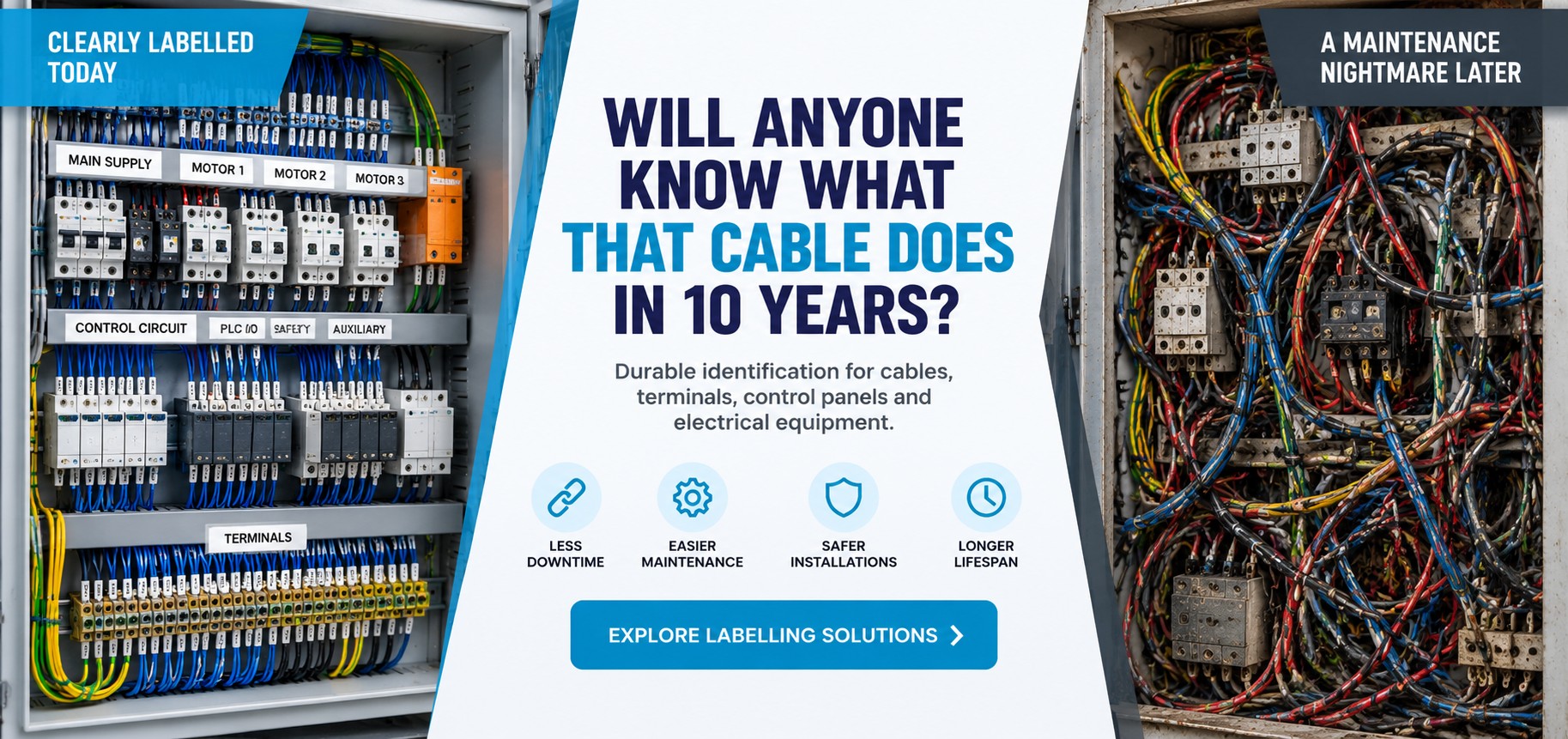
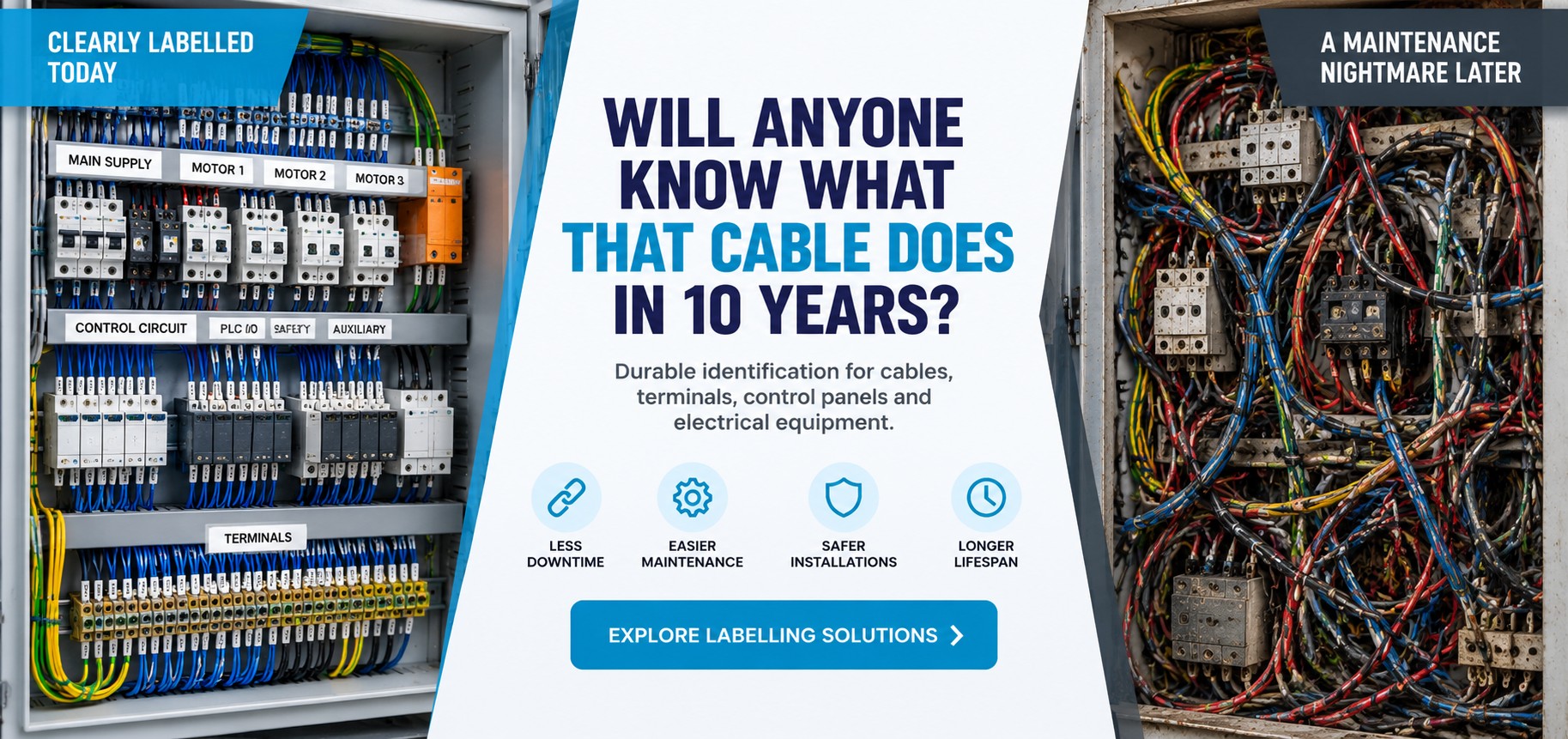
Will Anyone Still Know What That Cable Does in 10 Years?
A control panel, machine or electrical installation can remain in service for years — sometimes decades.
During that time engineers may need to fault-find, inspect, modify, repair or replace parts of the installation.
Clear, durable identification helps make sure the person opening that cabinet years from now can still identify the cables, terminals, components and equipment in front of them.
The Installation Can Outlive the Original Engineer
The person servicing an electrical system several years from now may have had nothing to do with its original installation.
They're relying on the documentation and identification left behind to understand what they're looking at.
Unclear Identification Becomes Somebody Else's Problem
Faded labels, handwritten markings, missing cable IDs and inconsistent numbering can make future maintenance and fault-finding unnecessarily difficult.
Identification From Cable to Cabinet
An electrical installation can require identification at several different levels.
✓
Cable
Identify individual cables and wiring.
✓
Terminal
Keep terminal identification clear and consistent.
✓
Component
Identify devices and components inside the panel.
✓
Panel
Label controls, switches and panel positions.
✓
Cabinet
Identify the complete enclosure or asset.
What Needs Identifying?
Cables & Wires
Create clear identifiers for cables and wiring used throughout machinery, panels and electrical installations.
Terminal Blocks
Keep terminal positions identifiable during installation, testing, maintenance and modification.
Control Components
Identify relays, contactors, drives, PLC components, power supplies and other panel hardware.
Push Buttons & Controls
Produce identification for switches, indicators, selectors and operator controls.
Electrical Panels
Identify panel sections, circuits and other important information around the enclosure.
Cabinets & Enclosures
Give complete cabinets and enclosures clear asset or equipment identification.
Machinery
Identify electrical and control equipment incorporated into larger machines and production systems.
Warning & Information Labels
Produce suitable operational or equipment information labels where required by the application.
Asset Identification
Add barcodes, QR codes or human-readable identifiers to suitable electrical and control assets.
The Label Has to Survive the Installation
A beautifully printed label isn't useful if it becomes unreadable long before the equipment reaches the end of its working life.
The appropriate label construction depends on where it is being used and what it will encounter.
- Heat generated within equipment or panels
- Oil and grease around machinery
- Industrial cleaning processes
- Moisture and changing environmental conditions
- Abrasion during installation or maintenance
- Outdoor exposure where applicable
- Repeated handling of cables and components
- Long expected equipment life
Think About the Required Lifespan
If the equipment is expected to remain operational for many years, the identification system should be selected with that expected service life in mind.
Why Thermal Transfer?
Thermal-transfer printing uses a ribbon to create the printed image on compatible label media.
With the correct media and ribbon combination, it provides a useful starting point for durable industrial identification applications.
Desktop Thermal Transfer
Suitable for many panel-building, workshop and lower-volume identification requirements.
- Compact footprint
- Workbench installation
- Smaller print batches
- Regular cable and component identification
Industrial Thermal Transfer
Better suited to higher-volume manufacturing and production environments where labels are produced throughout the day.
- Higher print volumes
- Manufacturing environments
- Production-line labelling
- Regular industrial use
The Printer Is Only Part of the System
Durable electrical identification depends on more than the printer itself.
Label Material
The media needs to suit the surface, environment and expected lifespan of the finished identification.
Adhesive
The adhesive needs to remain attached to the particular cable, component, panel or equipment surface.
Ribbon
The thermal-transfer ribbon should be matched to the media and durability requirements of the application.
Printer + Media + Adhesive + Ribbon
Treat these as parts of one identification system rather than four unrelated purchasing decisions.
Cables Create Their Own Labelling Challenge
Unlike a flat cabinet door, a cable is narrow, curved and may be handled or moved during installation and maintenance.
That means the available identification area, label format and method of attachment all need to be considered.
Small-Diameter Cables
Limited space can require compact text and careful selection of the identification format.
Larger Cables
Larger cable diameters may provide more identification options but still require suitable materials and attachment.
Dense Control Cabinets
When many cables terminate in a relatively small area, consistent and readable identification becomes especially useful.
Maintenance & Modification
Identification should remain useful when somebody needs to trace or replace a cable years after installation.
Who Needs Industrial Electrical Identification?
Control Panel Builders
Identify wiring, terminals, components, controls and complete panel assemblies.
System Integrators
Create consistent identification across control systems, automation projects and integrated machinery.
Industrial Automation
Label PLC systems, drives, controls, field wiring and associated automation equipment.
Machine Builders
Identify wiring and electrical components incorporated into machinery supplied to customers.
Switchgear Manufacturers
Produce clear identification for switchgear, cabinets, components and associated wiring.
Electrical Contractors
Produce professional identification for installed electrical equipment, panels and cabling.
Instrumentation & Controls
Identify instruments, control equipment, terminals and associated wiring.
Manufacturing
Support electrical identification around machinery, production equipment and industrial plant.
Industrial Maintenance
Replace damaged or missing identification and maintain consistency as equipment is repaired or modified.
Could a Barcode or QR Code Add More Information?
Human-readable identification may be all that's required for many cables, terminals and components.
For suitable equipment and assets, a barcode or 2D code can provide a machine-readable identifier that links the physical item to information held elsewhere.
Human-Readable Identification
Cable numbers, terminal IDs, component references, equipment names and other information remain immediately visible to the engineer.
Machine-Readable Identification
Add a barcode, QR code or Data Matrix code where the workflow benefits from scanning the physical equipment.
You Can Use Both
A label can carry human-readable information alongside a machine-readable identifier, giving engineers a visible reference while also supporting digital workflows.
Start With the Application, Not the Printer
Tell us what you're trying to identify and where the finished label will be used.
1. What Are You Labelling?
Cable, wire, terminal, electrical component, panel, cabinet, machine or another item?
2. What Size Is It?
Tell us the approximate dimensions available for the finished identification.
3. What Is the Surface?
Is the identification being applied to cable insulation, plastic, painted metal, stainless steel or another surface?
4. What Must It Survive?
Consider heat, moisture, oil, chemicals, cleaning, abrasion and outdoor exposure.
5. How Long Must It Last?
Is this temporary installation identification or something expected to remain readable for many years?
6. How Many Labels?
Are you printing a few labels for individual projects or producing identification continuously in a panel shop?
7. What Needs Printing?
Text only, serial numbers, barcodes, QR codes, Data Matrix or a combination?
8. Where Will Printing Happen?
Workshop, production line, site office or somewhere closer to the installation itself?
Very Small Identification?
Cable markers, terminal labels and compact components can leave very little room for printed information.
Where text or machine-readable codes become particularly small, print resolution can become an important part of printer selection.
Don't Shrink Everything Until It Fits
A printer may physically produce tiny text or a tiny barcode, but that doesn't automatically mean the finished identification will remain practical to read or scan.
Start with the smallest identification you genuinely need and make sure both the print quality and scanning requirements are considered.
Hardware for Electrical Identification
The appropriate hardware depends on the type and volume of identification you're producing.
Desktop Label Printers
A practical option for panel shops, engineering workshops and regular lower-volume identification.
- Compact footprint
- Thermal-transfer options
- Workbench use
- Barcode and text printing
Industrial Label Printers
Designed for heavier print volumes and regular use within industrial production environments.
- Higher print volumes
- Manufacturing environments
- Regular production use
- Industrial construction
Labels & Ribbons
Match the media, adhesive and thermal-transfer ribbon to the required surface and durability.
- Different label materials
- Different adhesive requirements
- Thermal-transfer ribbons
- Application-specific media
Do Labels Need Printing on Site?
Not every identification requirement happens inside a panel shop.
Installation and maintenance teams may discover that additional or replacement labels are required while they're standing next to the equipment.
Consider Where the Label Is Needed
If engineers regularly leave the job to return to a fixed printer, a mobile printing workflow may also be worth investigating.
Electrical Identification Checklist
- What needs identifying?
- How much physical space is available?
- What information needs to be printed?
- Does the label need a barcode or 2D code?
- What material or surface will it attach to?
- Will the identification be indoors or outdoors?
- Will it encounter heat, oil, moisture or chemicals?
- Will it be rubbed or handled during maintenance?
- How long does the identification need to remain readable?
- How many labels are produced per day or project?
- Does printing happen in a workshop or at the point of work?
- What printer or labelling system is currently being used?
Test the Identification on the Real Application
For demanding or long-life electrical identification, it's worth checking the complete label setup before standardising it across production.
Actual Surface
Test the label on the same cable, component, enclosure or material used in the finished installation.
Actual Environment
Consider realistic heat, moisture, oil, cleaning and handling conditions.
Actual Print Size
Test the smallest text and barcode dimensions that will genuinely be used.
Tell Us What You're Trying to Identify
You don't need to know which printer, media or ribbon you need.
Tell us what you're labelling, the approximate dimensions, surface, environment and how many labels you need to produce.
If you're replacing an existing setup, send us the printer model and the problem you're trying to solve.
Discuss Your Identification SetupDoes the Label Need to Survive a Harsh Environment?
If the main challenge is long-term exposure to weather, chemicals, abrasion or demanding industrial conditions, our durable asset-label guide goes into that problem in more detail.
Already Know Which Printer or Consumables You Need?
If you've already identified the printer, labels, ribbon or other hardware required, send us the manufacturer part number and quantity and we'll provide another business price to compare.
Make the Identification Last as Long as the Installation
The engineer opening the cabinet years from now shouldn't have to guess which cable, terminal or component they're looking at.
Start with the application and build the printing system around the identification it actually needs.
Help Me Choose a Labelling SetupImportant: label suitability depends on the complete application, including label material, adhesive, ribbon, substrate, environmental exposure, temperature, printing method and required working life.
Cable, wire and electrical identification requirements can vary significantly between applications. Media should be checked for compatibility with the exact surface and conditions involved.
Where identification forms part of a regulated electrical, safety or compliance process, the applicable standards and requirements should also be confirmed independently.